Ancient History
Interactive Timeline
Scroll thousands of years with maps, artwork, historic photos, audio narration, and video.
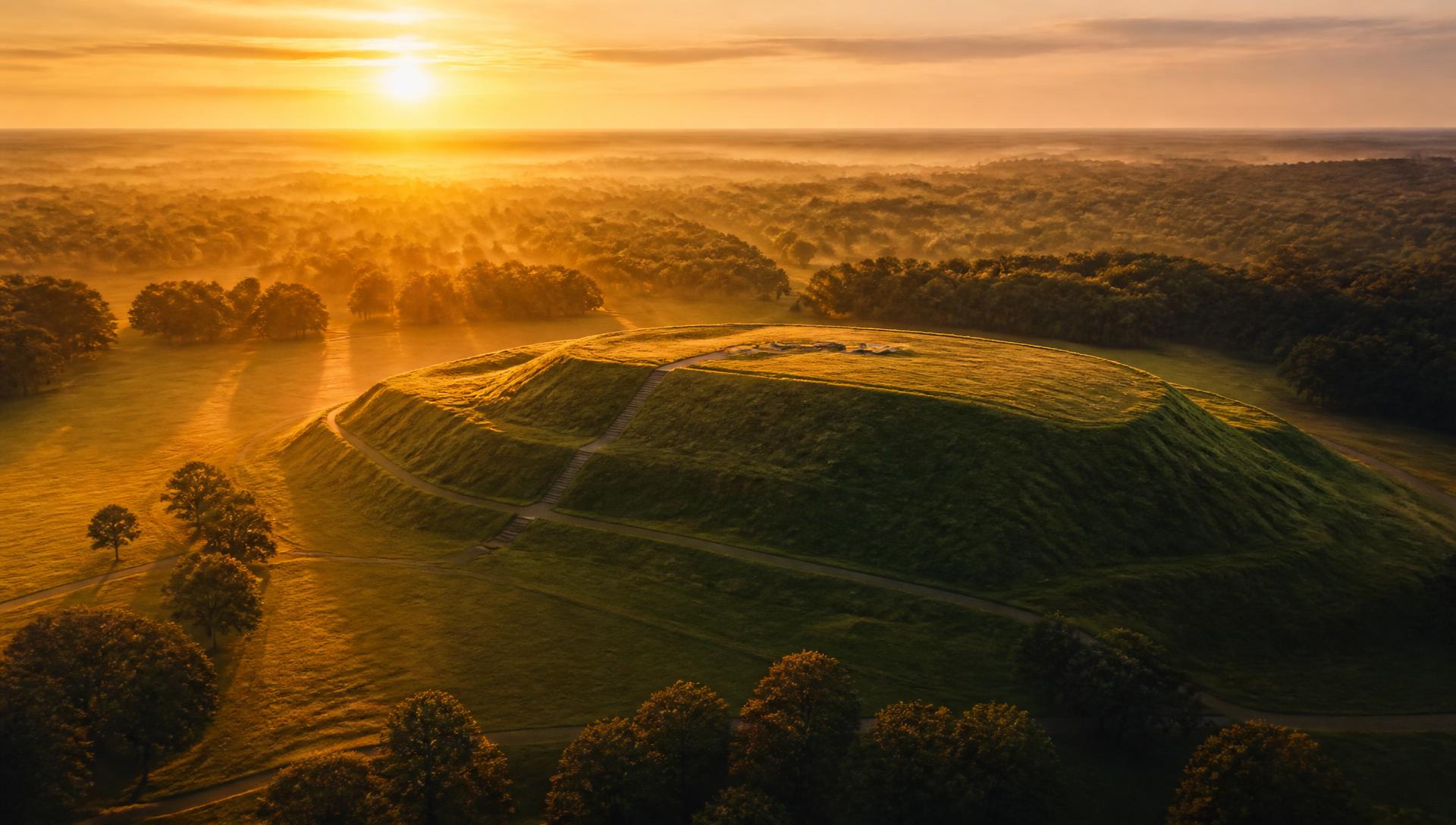
Macon, Georgia · Est. 900 CE
Discover 17,000 years of history in the palm of your hand — the ancestral homeland of the Muscogee (Creek) people.
The Complete History Experience
Ancient history, living culture, active archaeology, and everything you need to stand on the mounds yourself.
Ancient History
Navigate
Immersive
Research
Muscogee (Creek) Nation
Family & Classroom
Interactive Timeline
A preview of eight eras. Open the full timeline for maps, artifacts, and narrated chapters.
c. 15,000 – 8,000 BCE
The earliest known peoples camped along the Ocmulgee River, hunting late Ice Age game and shaping Clovis-style spear points from local chert.
c. 8,000 – 1,000 BCE
Seasonal camps grew into long-term settlements. Communities gathered river cane, nuts, and shellfish, and began working stone bowls and ground tools.
c. 1,000 BCE – 900 CE
Pottery, burial mounds, and cultivated plants transformed daily life. Villages became permanent and ceremonial life deepened.
c. 900 – 1,100 CE
A major town rose on the plateau: the Great Temple Mound, the Funeral Mound, and the Earth Lodge with its bird-shaped clay floor and 47 molded seats.
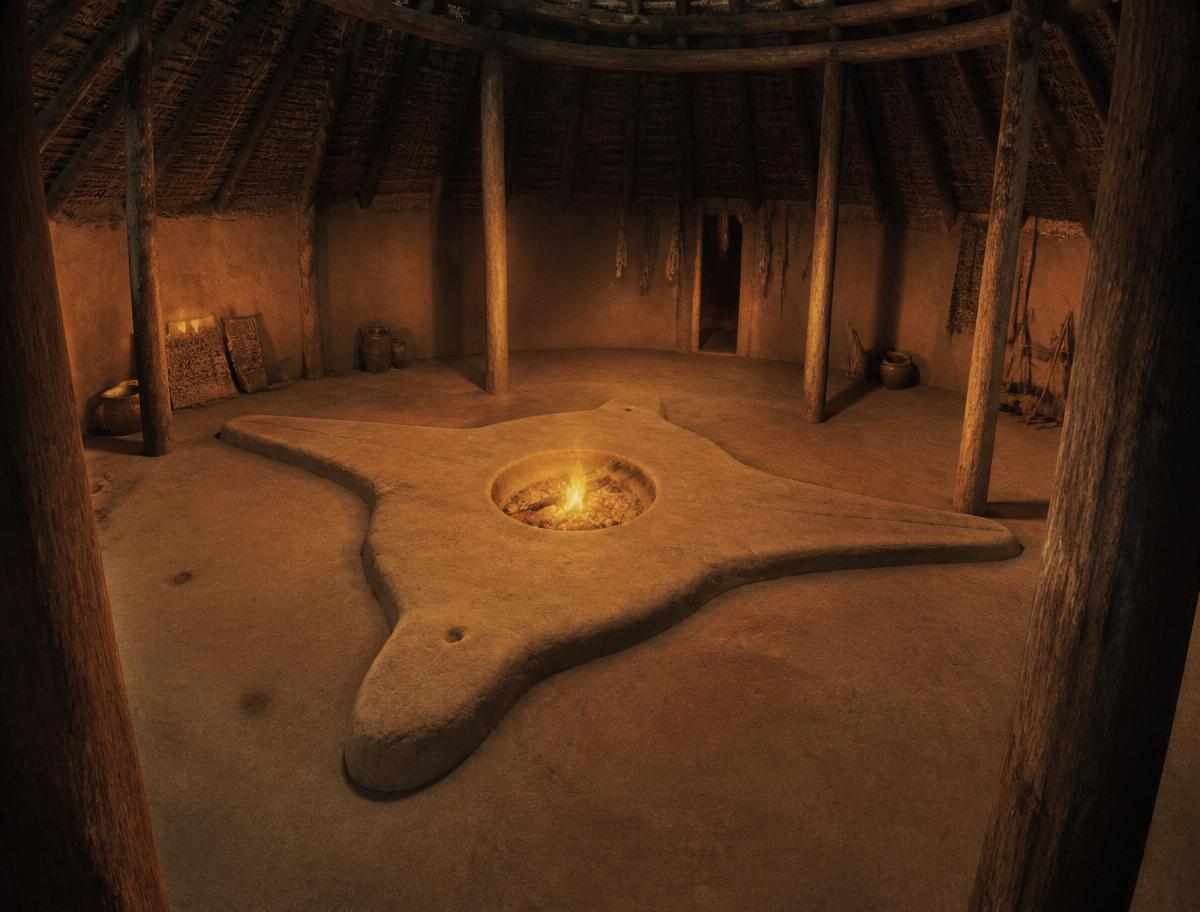
Virtual Tour
A council chamber with 47 molded seats around a bird-shaped platform, dated to roughly 1015 CE.
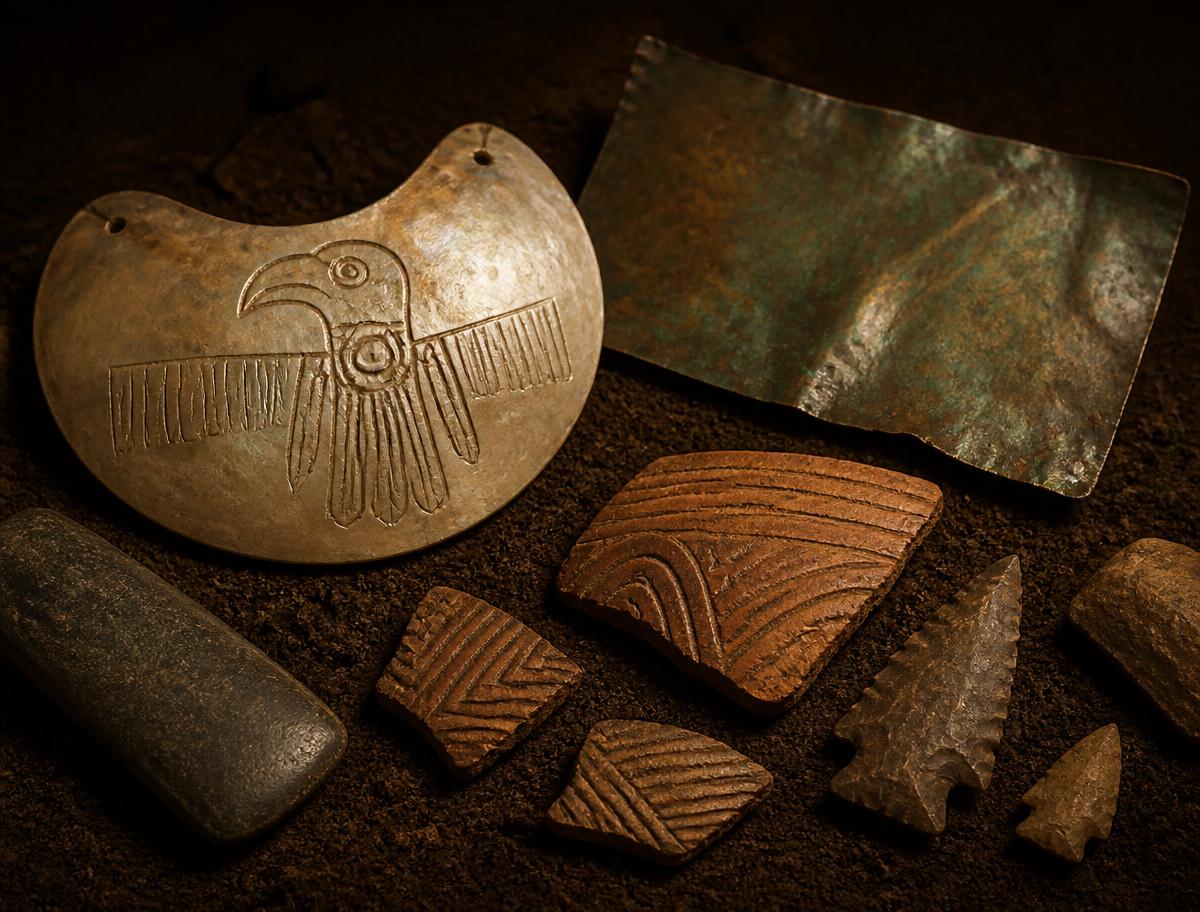
Artifact of the Month
Falcon imagery links Ocmulgee to a ceremonial world stretching across the Mississippian South.
AI Tour Guide
A guided companion for the questions visitors ask most — on the trail or from home.
“Who built the mounds?”
Ancestors of today's Muscogee (Creek) Nation. The largest earthworks were raised by Mississippian-period communities beginning around 900 CE.
“How old is the Earth Lodge?”
Its original clay floor has been radiocarbon dated to roughly 1015 CE, making it one of the oldest surviving ceremonial floors in North America.
“What should I see first?”
Start at the Visitor Center museum, walk to the Earth Lodge, then climb the Great Temple Mound for sunrise views over the Ocmulgee River floodplain.
“What artifacts have been discovered?”
More than 2.5 million: shell gorgets, copper plates, stamped pottery, projectile points, and trade goods from the colonial deerskin era.
Membership
Documentaries, VR tours, archives, live lectures, and members-only archaeology updates — $4.99/month or $39.99/year.
See membership options